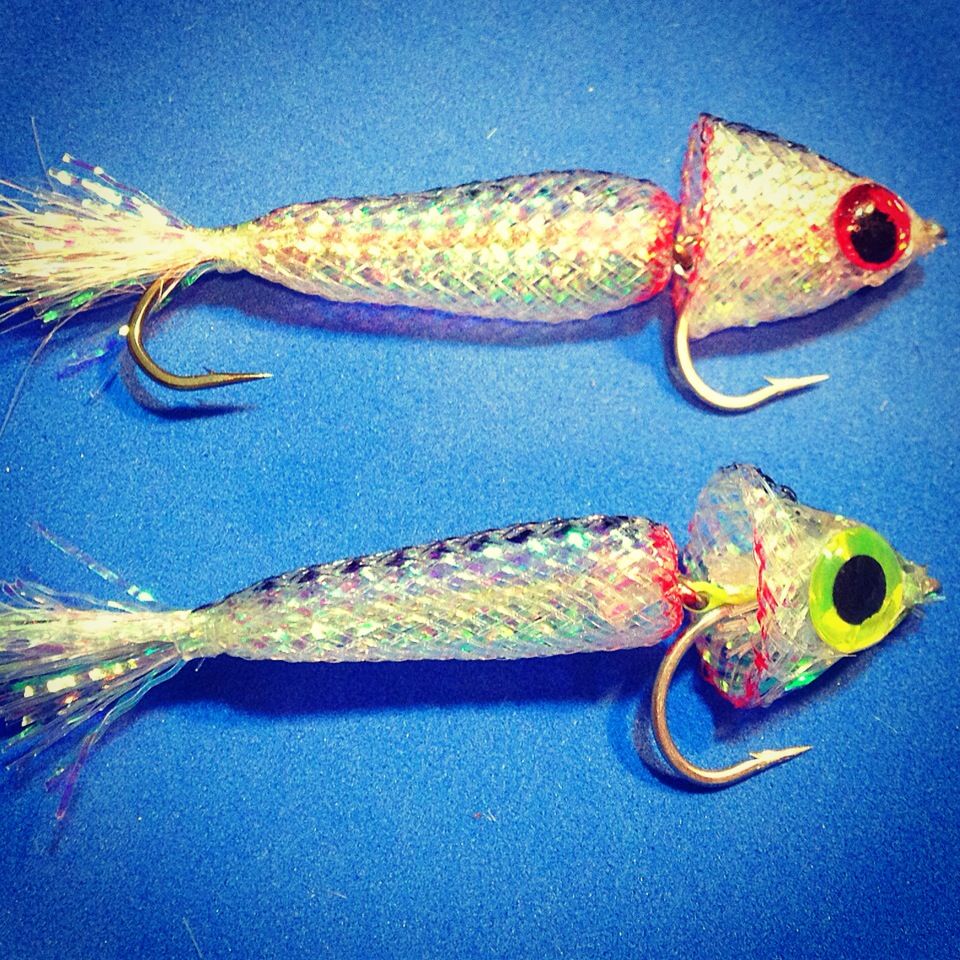
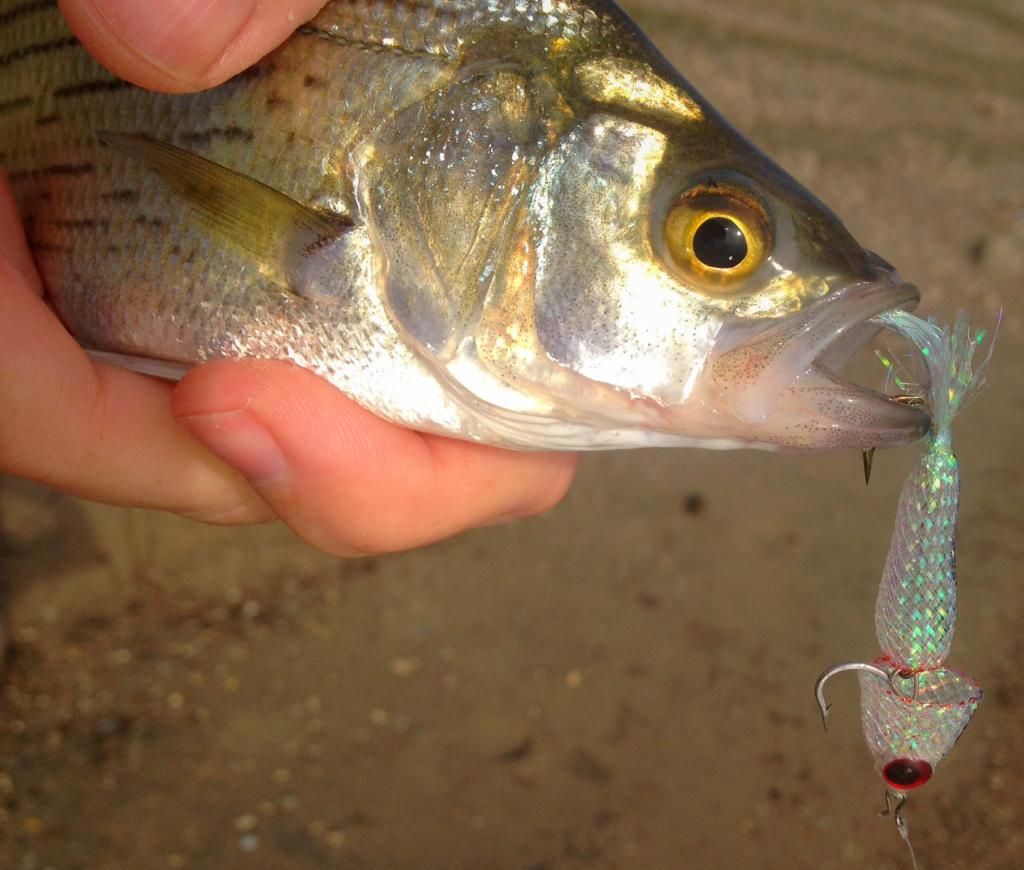
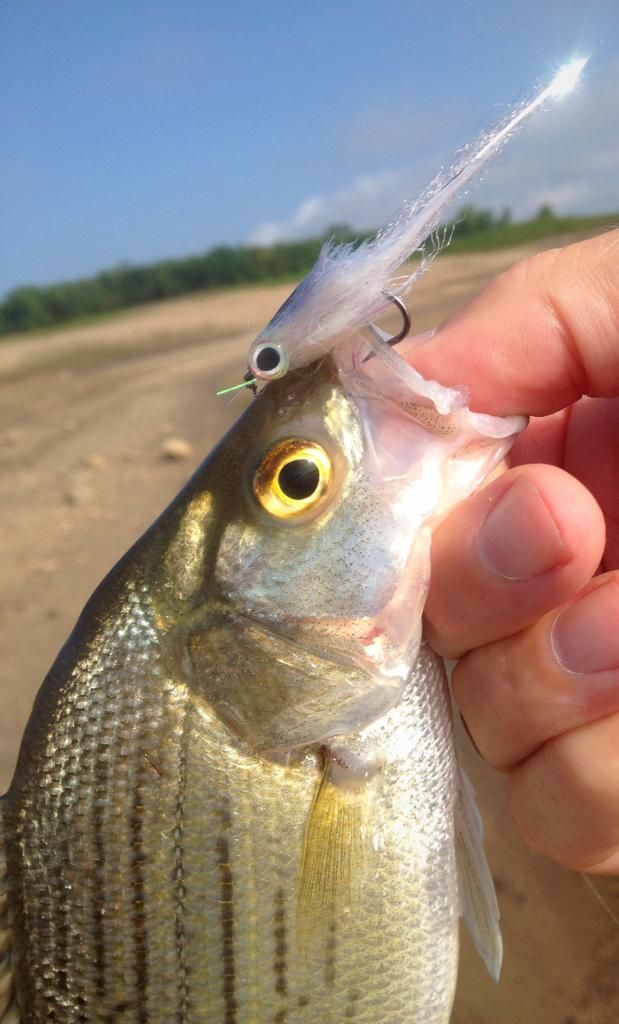

Another fly that did well was the bottom one in the picture below. You may not be able to see it in the picture, there is a metal bead on the hookshank about 1/3 hook shank length back from the hook eye. The tail materials tangled some, but I could still fix it and fish it.
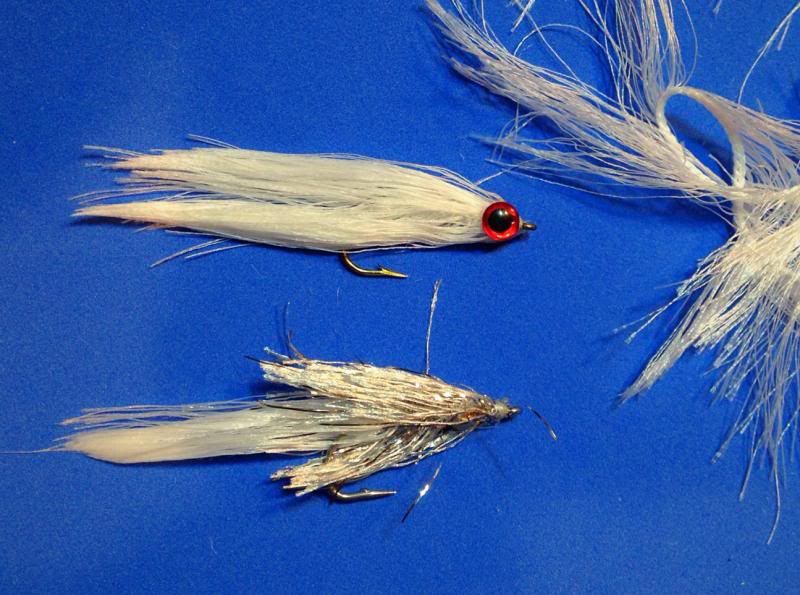
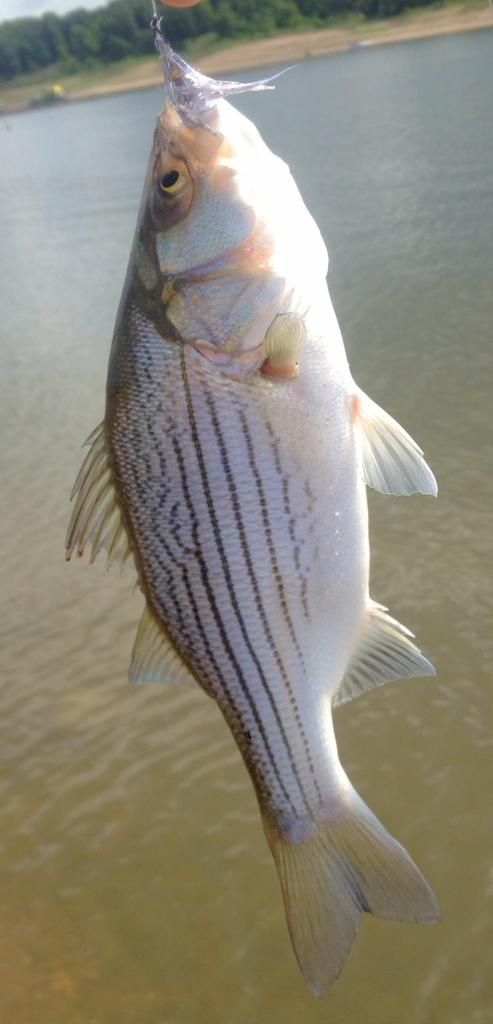
I missed at least 2 strikes for every fish caught on the above patterns, probably because of the size and hook placement.
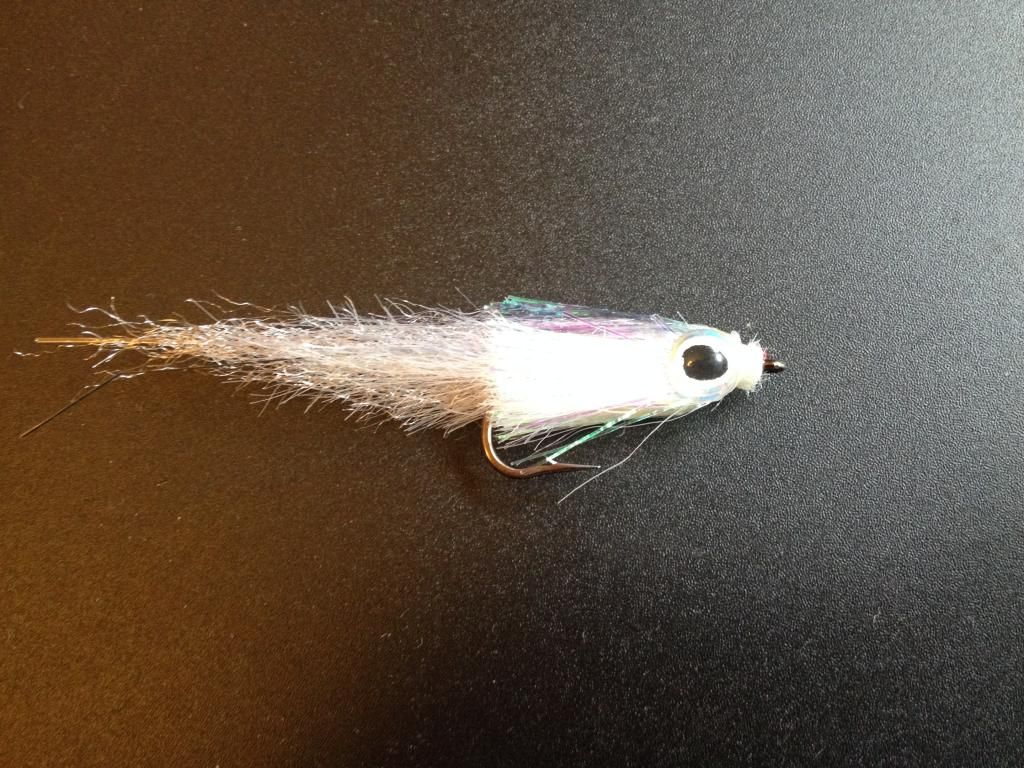
I had a tip from a fellow flyfishing white bass angler... Small #8 Clousers tied with marabou instead of bucktail. I had tied up a couple of these:

I fished the bottom two, while my buddy Jay fished the top one. They all caught fish VERY well, with much fewer missed strikes than the bigger patterns.

In fact, I had the biggest White Bass/Wiper of the day on the middle fly above. The strike and fight were amazing....after 10-15 seconds, I decided I must have hooked a channel catfish, THAT's how hard this fish was bulldogging and fighting! I finally dragged it up onto the sand in the shallows, but it flipped a few times, threw the fly, and swam away. It was probably about a 15" fish. Not huge, but REALLY NICE, especially after battling with the fun medium-sized fish (11-12") all day.
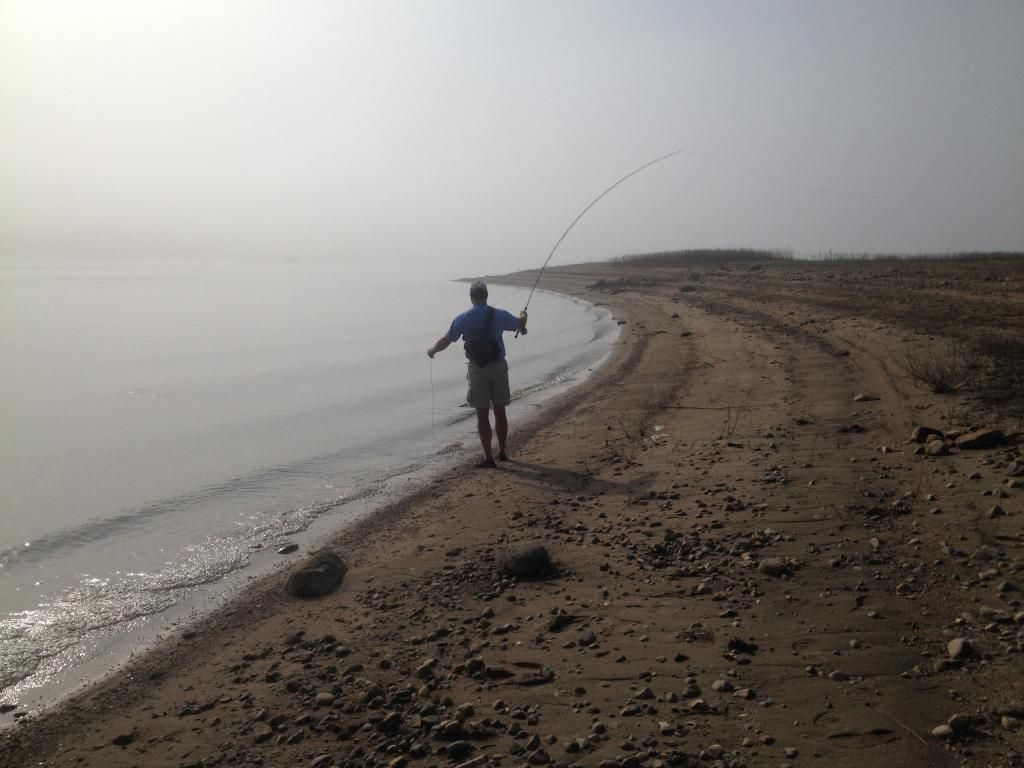
Jay took my picture against the fog on the lake in the morning.